Your Patient Privacy Rights in Credit Reports
Explore Your Patient Privacy Rights in Context
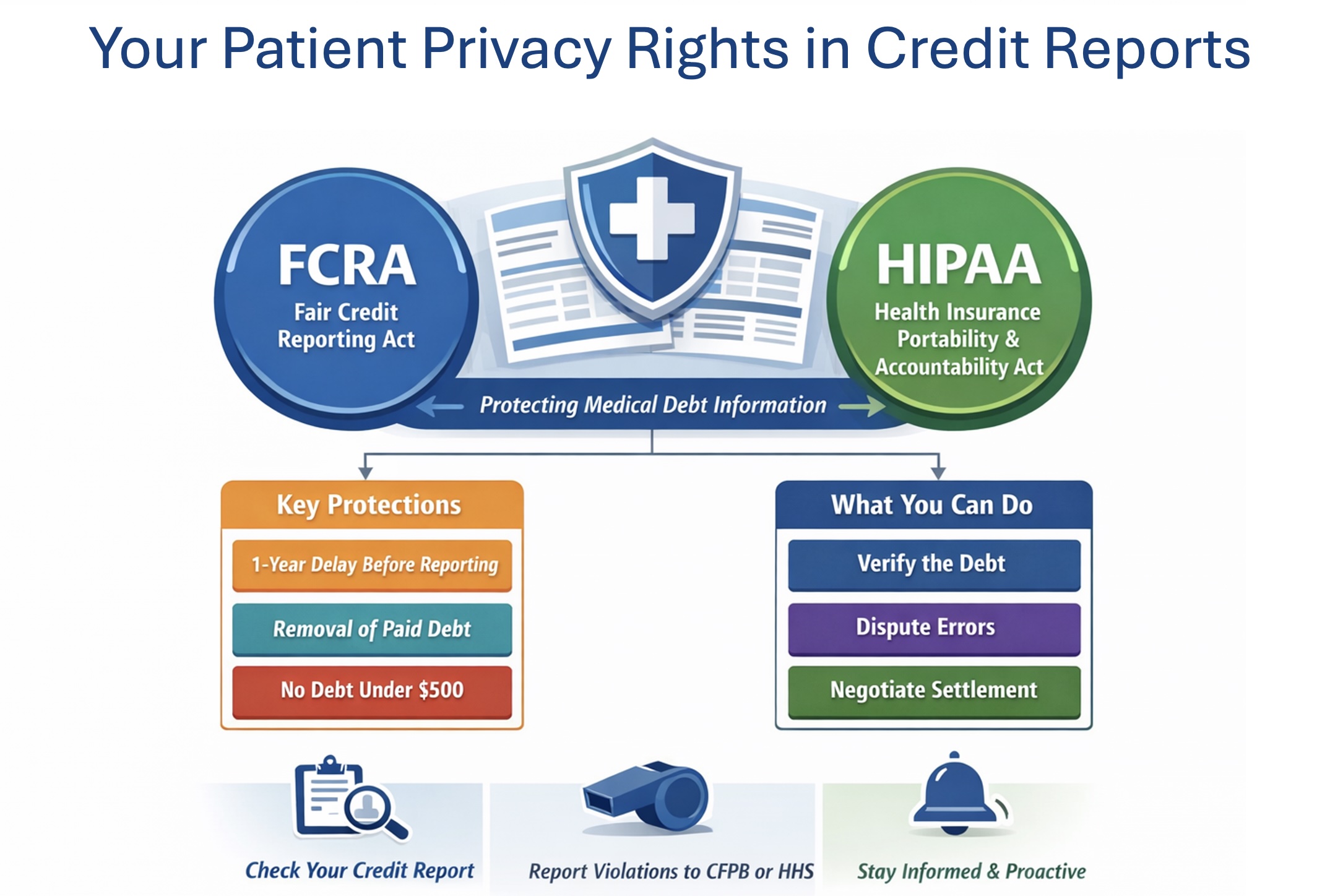
You have the right to medical privacy even when health-related bills intersect with the credit system, and federal law provides clear protections and remedies. These rights are governed primarily by two federal laws—the Fair Credit Reporting Act (FCRA) and the Health Insurance Portability and Accountability Act (HIPAA)—which together regulate how credit bureaus collect, use, and share medical debt information on personal credit reports.
Your patient privacy rights in medical debt reporting
The Fair Credit Reporting Act regulates how credit bureaus collect, use, and share consumer information. When it comes to medical debt, key protections include:
- Delay Before Reporting: As of July 2022, the three major credit bureaus (Equifax, Experian, TransUnion) must wait at least one year before including unpaid medical debt on a consumer's credit report. This gives patients time to resolve billing disputes or secure financial assistance.
- Removal of Paid Debt: Medical debt that has been paid off must be removed from credit reports and can no longer be used in credit scoring. This should occur automatically once it is paid in full.
- Minimum Amount Threshold: Starting in 2023, medical debt under $500 is no longer included on credit reports.
What to do:: You can take the following steps to remove medical debt from your credit report:
- Verify the debt: Request a debt validation letter from the collection agency within 30 days of being contacted. Your letter should confirm the amount owed, the original creditor (e.g., hospital or doctor's office), and that it is your debt. If the collection agency cannot validate the debt, it must be removed from your credit report.
- Dispute errors with credit bureaus: If medical debt appears on your credit report in error, you can file a dispute with each of the large credit bureaus: Equifax, Experian, and Transunion. Include in your dispute: a copy of your credit report showing the debt, a written explanation of the issue, and any supporting documents (e.g., billing statements and proof of payment).
- Negotiate with the medical provider or collector: If the debt is accurate but unpaid, contact the provider or collection agency to: (a) settle the debt; (b) request they remove the debt from your credit report upon payment (a "pay-for-delete" agreement); or, (c) ask or financial assistance or charity care. Always get agreements in writing.
Your right to medical privacy in credit reporting
HIPAA governs the collection and sharing of your personal health information by your health care providers, health plans, and their business associates. Under HIPAA and the Fair Credit Reporting Act, medical information reported to credit bureaus cannot contain: provider names, treatment types or diagnoses, or any identifying medical details.
What to do:: Violations can be reported to the Consumer Financial Protection Bureau or the Department of Health and Human Services. If you have an incident to report, please let us know.
Check your credit report
Monitor your credit report regularly.
What to do:AnnualCreditReport.com offers free annual reports from all three bureaus. If you have an incident to report, please let us know.
Staying informed and proactive about your credit report is an important part of protecting your medical privacy—federal law gives you some tools. To stay informed as rules and practices evolve and incidents occur, join our mailing list. And if you experience a concerning situation tied to your health information, please report the incident so we can track patterns and strengthen public accountability. Donate, as you are able, to support this work.
Select another context in which to examine your patient privacy rights:
Note: The content above is general information for the public and is not legal advice for any specific situation. Rights and processes relevant to a particular situation can vary based on circumstances and additional state or federal laws.
This document was created and is maintained by PPR President Dr. Latanya Sweeney. Please share your feedback and let Dr. Sweeney know about the ways you've used it, and if you have any suggestions.
